
photo Vanni di Ponzano
Vancouver
B.C. / Canada

T: +1 604 928
E: Send email:

email

Linkages: Ponzano & Bopjet .

Sempre in Giro

Montagner & Oria Tubing
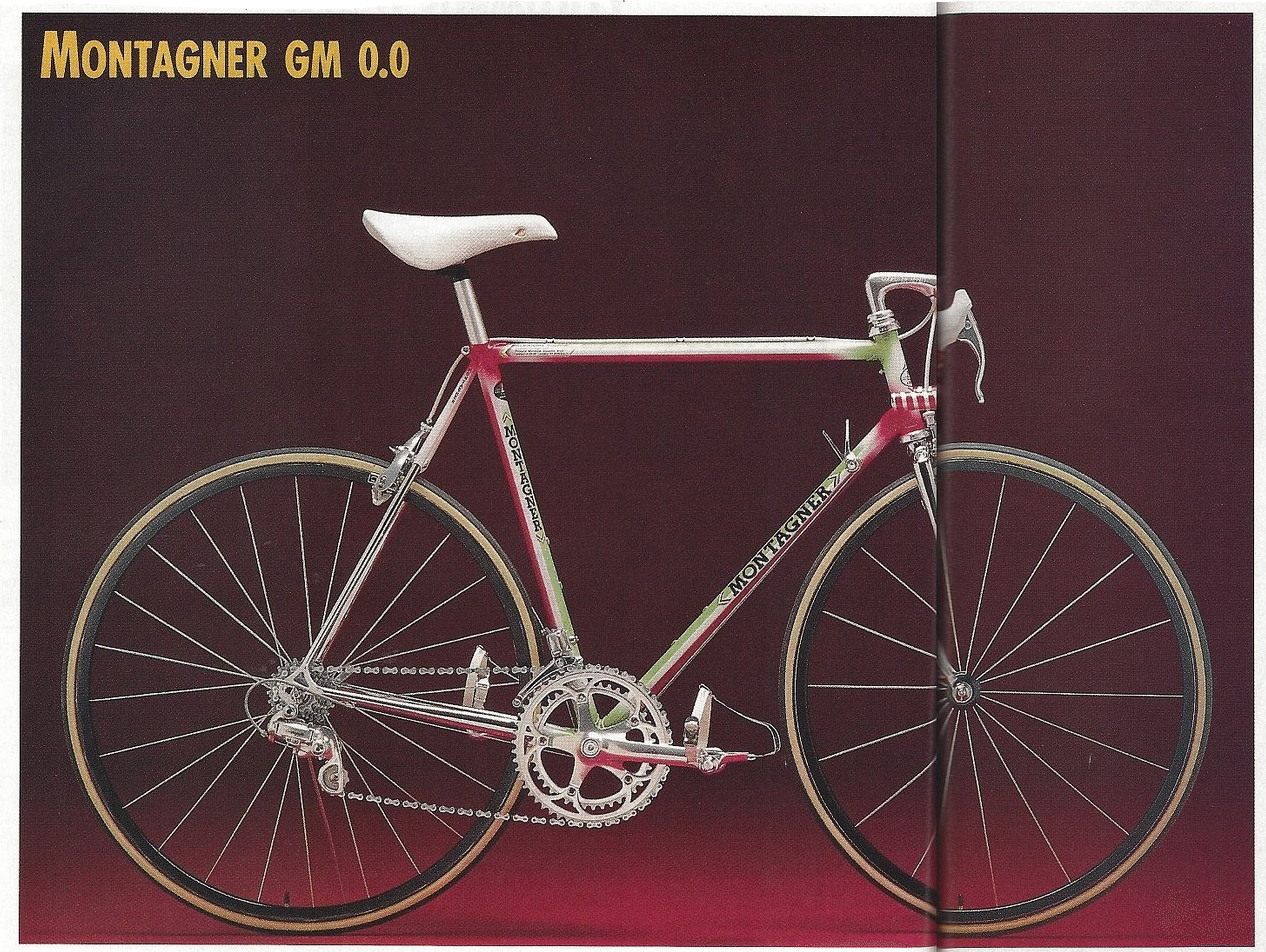

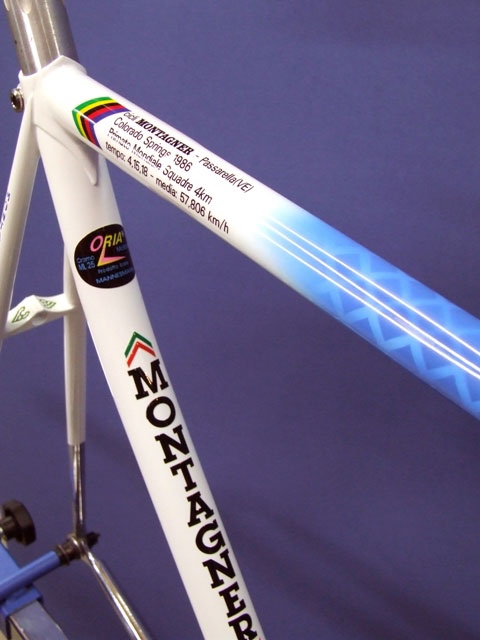
Six bills is not an insignificant sum to spend on a new racing frame, but in these times of a devalued dollar, $605 for a rigid, agile, hand built Italian frame set could be called a bargain. The name Luigi Montagner (mon-tan-YAIR) isn’t yet rolling off the tongues of American cyclists, but it deserves to be if our test frame is representative of his work. Underneath the flawless Italian tricolour paint and chrome is the quickest-handling frame in this test. And, except for the massive MAX-tubed Bianchi Proto (page 122), the most rigid on the Tarantula. Precise workmanship and investment-cast fittings, including the fork crown and Cinelli bottom bracket shell, add to this frame’s value. We tested it with Campagnolo Chorus componentry. A former racer, Montagner earned his reputation building frames for several Eastern European national teams. He uses mostly Italian Oria tubing, which has yet to earn the U.S. consumers’ acclaim and consequent price markup.
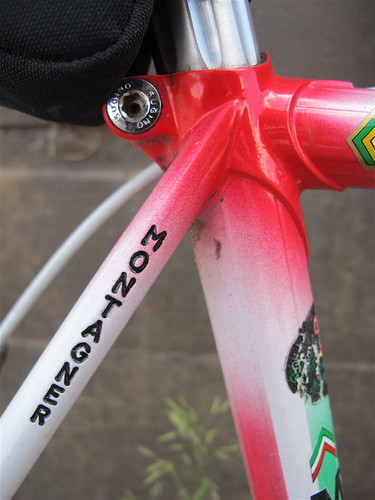
image Montagner workmanship
The tubes in our test frame were GM 0.0, an externally ribbed chrome-moly designed by Oria for Francesco Moser’s hour-record machine. Each main tube features 4 wide, parallel ribs, which Oria claims increases rigidity by 15%. This figure is difficult to verify because the GM 0.0 tube-set mixes wall thick-nesses, ruling out meaningful comparisons with unribbed sets. The down tube is especially beefy, with 0.95-mm butts and a central section thinned yo a still-hefty 0.8 mm. The top tube is 0.95/0.75 mm double butted; the seat tube which is 0.7/0.5 mm single butted, requires a 26.4-mm seat post. The frame and fork weights of 4.8 and 1.76 pounds, respectively, aren’t especially light. In fact, the Proto was lighter despite its larger frame size, and it outmuscled the Montager in lateral deflection and fork splay, though not in-line deflection. The Montagner’s performance was reminiscent of my old rock-solid Marinoni, which was built with heavy-gauge Columbus SP down and seat tubes. It took a hard anaerobic effort to induce any chain rub, and the top tube and front end did not yield during all-out sprints. The ride is stiff, but not unendurably so. This would be a good frame for a strong rider who weighs 150 pounds or more, but its superior rigidity would probably be uncomfortable overkill for a lightweight spinner. Although this frame has the same 1.88 inches of trail as the De Rosa (page 126), the Montagner is a much quicker bike, probably because of its shorter 38.8-inch wheelbase. It’s not a bike for the sightseeing cyclist or the triathlete who wants autopilot steering. But for the competitor or devoted performance rider who has the skill to appreciate a blend of stiffness and agility, the GM 0.0 frame is a professional-quality tool.


Source: Kukoda, John. Bicycling; New York Vol.29, Issue 6, (July 1988): p 120.

<< | >>